The early signs of pressure sores in older people can be easy to overlook, particularly when someone is spending more time sitting or lying in bed than usual. Yet recognising changes early and seeking appropriate professional advice can make an important difference to their comfort, health and wellbeing.
At Braeburn Care, our Care Professionals regularly support customers whose mobility, routines and care needs change over time.
A recent experience with one of our customers demonstrates why noticing those changes, and knowing when to involve healthcare professionals, is so important.
What are pressure sores, and why do they develop?
Pressure sores, also called pressure ulcers, are areas of skin and underlying tissue damage caused by prolonged pressure or pressure combined with friction or shear.
They can develop when someone remains in one position for extended periods, particularly if they have reduced mobility or difficulty repositioning themselves.
Common areas affected include the heels, hips, elbows, bottom and lower back.
The NHS guidance on pressure sores explains the symptoms, risk factors and importance of seeking medical advice.
7 early signs of pressure sores in older people
Families and carers should be aware of the following changes:
-
Persistent redness or discolouration. Skin may appear red, purple or blue, depending on skin tone, and the colour may not fade when pressure is relieved.
-
Changes in skin temperature. An affected area may feel warmer or cooler than the surrounding skin.
-
Pain or tenderness. Someone may complain of discomfort when sitting, lying down or having a particular area touched.
-
Changes in skin texture. Skin may feel unusually firm, soft or spongy.
-
Swelling. Localised swelling can indicate that an area needs attention.
-
Blisters or broken skin. These can indicate that skin damage has already occurred and require prompt assessment.
-
Spending more time in one position. Although not itself a skin symptom, reduced movement or increased time in bed is an important warning sign of greater pressure damage risk.
Not every skin change is a pressure sore. However, suspected pressure damage should be assessed promptly by an appropriate healthcare professional.
A real example: noticing a change before it becomes more serious
During routine visits, our Care Professionals noticed that one customer had started spending considerably more time in bed.
They also observed areas of redness on her skin, although the skin remained intact.
Rather than dismissing these changes, the team recognised that they could indicate an increased risk of pressure damage.
They contacted the customer’s GP and requested an assessment.
Following the GP’s review, a referral was made to the District Nursing Team for specialist input.
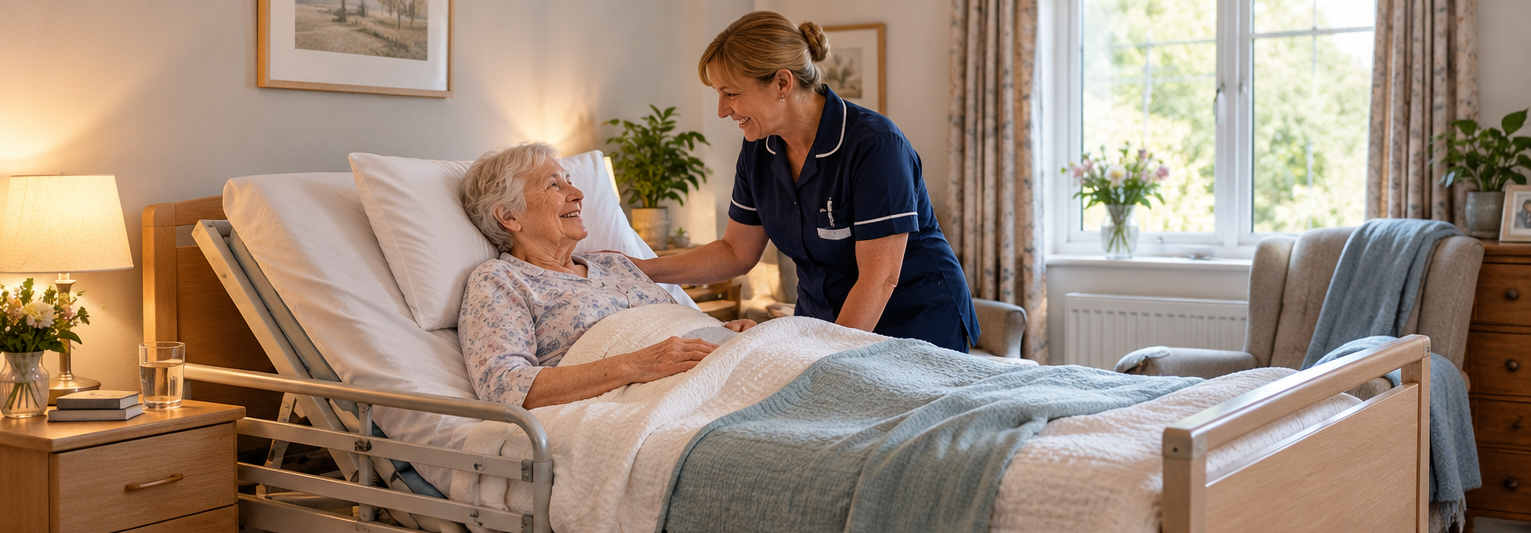
The District Nurses assessed the customer’s needs and recommended a hospital bed and pressure-relieving mattress to support positioning and reduce pressure-related risks.
A further assessment by the Community Support Team supported the recommendation.
Arrangements were subsequently made through Medi Quip for the relevant equipment to be delivered.
Throughout the process, our Care Professionals continued monitoring the customer, recording relevant observations and communicating with the professionals involved.
This is an example of something families should expect from a home care provider: recognising changes, communicating concerns and following them through appropriately.
Why joined-up care matters
Recognising the early signs of pressure sores in older people is only part of the picture.
Responding effectively may require several professionals, each with different responsibilities.
A GP can assess concerns and arrange appropriate referrals. District Nurses can provide specialist nursing assessment and advice. Community teams may assess equipment or additional support needs.
Meanwhile, Care Professionals are often well placed to notice changes during regular home visits.
At Braeburn Care, our role is not to replace clinical professionals. It is to observe, communicate, follow agreed guidance within our competence and help ensure concerns are not overlooked.
This coordination is particularly important when a customer’s needs change gradually.
How can families help reduce pressure sore risks at home?
Understanding the early signs of pressure sores in older people can help families know when to seek advice.
Practical considerations include:
-
Encouraging appropriate movement and repositioning, following professional advice.
-
Checking for changes in comfort, mobility and skin condition where appropriate.
-
Seeking guidance about pressure-relieving equipment when needed.
-
Supporting adequate nutrition and hydration.
-
Reporting new redness, discomfort or skin damage promptly.
The NICE guidance on pressure ulcers: prevention and management provides further information about risk assessment, prevention and care.
Importantly, specialist mattresses and beds do not replace appropriate monitoring, repositioning or professional assessment.
The importance of continued observation
For our customer, arranging specialist assessments and recommended equipment is an important step, but the support does not end there.
Our Care Professionals will continue observing her comfort, mobility and any visible changes within the scope of her agreed care.
They will also follow relevant professional guidance and escalate further concerns when necessary.
For families, this continuity can provide reassurance that changing needs are being noticed and communicated.
Ultimately, recognising the early signs of pressure sores in older people is about more than protecting skin. It is about supporting comfort, dignity and wellbeing, while ensuring the right professionals are involved at the right time.
Worried about an older relative spending more time in bed?
Changes in mobility, daily routines or the amount of time someone spends sitting or lying down may indicate that additional support is needed.
Braeburn Care provides home care across Tunbridge Wells, Tonbridge, Sevenoaks, Crowborough and surrounding areas, helping customers with everyday care while maintaining communication with families and relevant healthcare professionals.
If you are exploring home care for someone you love, call 01892 577680 or email enquiries@braeburncare.co.uk for an informal conversation.
For suspected pressure sores or new skin damage, seek advice from a GP or appropriate healthcare professional promptly rather than waiting for a routine care enquiry.
Frequently Asked Questions
- What are the first signs of pressure sores in elderly people? Early signs can include persistent redness or discolouration, unusual warmth, tenderness, changes in skin texture or discomfort around pressure points such as the heels, hips and lower back.
- How quickly can pressure sores develop in older people? Pressure damage can sometimes develop within hours, particularly when someone has limited mobility or remains in one position for prolonged periods. Early recognition and assessment are important.
- Can pressure sores be prevented at home? The risk can often be reduced through appropriate repositioning, regular skin observations, nutrition, mobility support and professionally recommended pressure-relieving equipment. Prevention plans should reflect the person’s individual risk and needs.
- Does Braeburn Care monitor changes in customers’ skin and wellbeing? Braeburn Care Professionals observe and report relevant changes during agreed care activities, including concerns about comfort, mobility and skin condition. Where necessary, our team escalates concerns to the appropriate healthcare professionals rather than attempting to provide specialist treatment outside their role.
- Can I arrange home care for an elderly parent in Tunbridge Wells? Yes. Braeburn Care provides home care in Tunbridge Wells and surrounding areas, supporting older people with daily routines, personal care and changing needs. Families can contact us to discuss a suitable care arrangement.
- Does Braeburn Care provide support in Tonbridge, Sevenoaks and Crowborough? Yes. We provide home care across Tonbridge, Sevenoaks, Crowborough and nearby communities, with support tailored to individual needs and circumstances.
- When should I contact a GP about a possible pressure sore? Contact a GP if you suspect a pressure sore. Seek urgent GP advice or NHS 111 if there are signs such as increasing pain, hot or swollen skin, pus or a high temperature.