
Hospital discharge is not simply an end point – it is one of the most critical moments in a person’s recovery journey. When discharge is carefully planned and properly supported, it can restore confidence, independence and wellbeing. When rushed or poorly coordinated, it can lead to setbacks, anxiety and avoidable readmissions. This is where live-in care after hospital discharge plays a vital role.
Following a serious fall and subsequent hip surgery, one of the individuals we support was initially identified for discharge just four days after her operation. On paper, this appeared reasonable. In reality, it required deeper assessment, professional advocacy and joined-up decision-making to ensure the right outcome.
Discharge Decisions Require Real-World Insight
Hospital environments are under constant pressure to free up beds, and discharge planning often relies on clinical milestones rather than day-to-day functional reality.
Our leadership team visited the individual in hospital and completed a detailed assessment alongside existing clinical input. At that point, she was unable to stand independently, weight-bear safely or mobilise without significant support.
Accepting discharge at that stage would have placed her at high risk – both physically and emotionally.
Rather than allowing care to default to urgency, we advocated for what was genuinely safe.
Advocacy Grounded in Experience
Advocacy is not about resisting hospital plans – it is about contributing meaningful, informed insight.
Our management team worked collaboratively with physiotherapists and occupational therapists, sharing observations from carers who had been present throughout the hospital stay. These carers had seen the individual’s confusion, fatigue, pain levels and limitations at different times of day – insight that only continuity of care can provide.
Together, we supported:
- Continued physiotherapy input to improve mobility
- Occupational therapy assessments to evaluate functional ability
- Identification of appropriate seating and equipment for discharge
- A realistic discharge timeline aligned with recovery, not pressure
This ensured that discharge was not simply possible – but safe.
Supporting Dignity While Easing Hospital Pressures
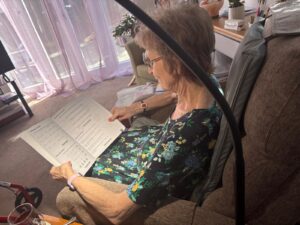
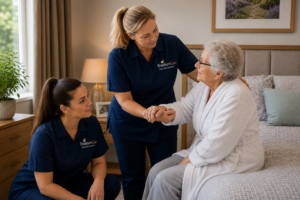
Throughout the hospital stay, our Care Professionals remained present around the clock. They supported personal care, feeding, toileting and reassurance, particularly during moments of confusion or agitation.
This support did not replace medical care – it complemented it.
By assisting with day-to-day needs, our carers reduced pressure on ward staff, allowing nurses and clinicians to focus on clinical priorities while knowing the individual was safe, supported and emotionally reassured.
This kind of joined-up working benefits everyone involved.
From Hospital to Home – Without Losing Continuity
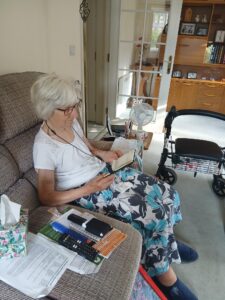
When discharge finally took place, the transition back home was calm, planned and familiar.
Because live-in care after hospital discharge was already established, there was no need to rebuild routines, introduce new carers or re-explain needs. The same trusted team transitioned seamlessly from hospital support back into the home environment.
For the individual, this meant:
- No unfamiliar faces
- No sudden changes in care approach
- No anxiety about being “left to cope”
- A sense of safety returning home
For the family, it meant confidence that recovery would continue without disruption.
Why Live-in Care Improves Discharge Outcomes
Hospital discharge is not the end of care – it is a change in setting. Live-in care after hospital discharge ensures that recovery continues with structure, reassurance and consistency.
Key benefits include:
- No gaps in support during a vulnerable transition
- Continuous monitoring of mobility, pain and wellbeing
- Medication support and routine management
- Emotional reassurance during recovery
- Clear communication with families and professionals
This level of support significantly reduces the risk of falls, confusion, deterioration and readmission – particularly following surgery, illness or reduced mobility.
Leadership Makes the Difference
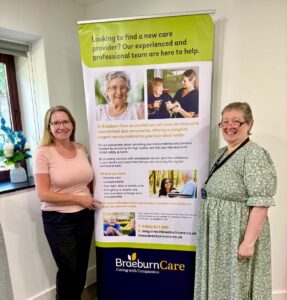
Behind every successful discharge is strong leadership. Our role is to coordinate care, advocate when needed, support carers and keep families fully informed.
This joined-up approach ensures decisions are made with the whole person in mind – not just the immediate hospital pathway.
For families navigating discharge decisions, knowing that someone experienced is guiding the process can make all the difference.
FAQs: Live-In Care After Hospital Discharge
- Can live-in care start immediately after discharge? Yes. Braeburn Care can coordinate live-in care to begin the moment someone returns home.
- Is live-in care suitable after major surgery? Absolutely. Live-in care is particularly effective following fractures, operations and reduced mobility.
- Do you work alongside NHS discharge teams? Yes. Our Braeburn Care leadership team regularly collaborate with physiotherapists, occupational therapists and discharge coordinators.
- Does live-in care reduce hospital readmission risk? Yes. Continuous care and support helps manage mobility, medication, nutrition and safety at home.
- Do you cover West Kent and surrounding areas? Yes – including Tunbridge Wells, Tonbridge, Sevenoaks, Crowborough and surrounding areas.
- Can families be involved in planning? Always. Families are kept informed and involved at every stage.
Hospital discharge should never feel rushed or uncertain. With the right leadership, collaboration and live-in care after hospital discharge, recovery can continue safely, confidently and at home.
If you’re planning a discharge for yourself or a loved one and want an experienced, joined-up approach, our team is here to talk things through;
 Call us on 01892 577680
 Learn more at www.braeburncare.co.uk
 Email enquiries@braeburncare.co.uk