
When our Care Professional Amy recently prepared homemade salmon, cod and haddock fishcakes for one of our customers, it prompted a wider conversation about eating well in later life. For families, changes around food can be easy to overlook. A parent may still tell you they have eaten, but what they eat, how often they cook and how much they enjoy mealtimes can gradually change.
The finished fishcakes looked delicious, served with broccoli and cauliflower. But there is a bigger story behind the photograph.
Why can eating become more difficult as we get older?
There is no single reason.
Changes in health, mobility or energy can make shopping and cooking more difficult. Appetite may reduce, while dental problems, difficulty chewing or swallowing, medication and some long-term health conditions can also affect eating. Living alone, bereavement and loneliness can influence appetite too.
Importantly, unexplained weight loss should not simply be dismissed as a normal part of getting older. UK guidance recommends seeking appropriate healthcare advice where there are concerns about unintentional weight loss or significant changes in eating.
For relatives who do not live with their loved one, however, the first signs can be much more subtle.
7 signs an older loved one may need more support with meals
When thinking about eating well in later life, consider whether you have noticed:
- Food regularly going out of date – particularly fresh food that would previously have been used.
- Meals becoming increasingly repetitive – perhaps relying heavily on toast, cereal, snacks or ready meals.
- Less interest in cooking – especially if someone previously enjoyed preparing food.
- Difficulty shopping for groceries – whether because of mobility, transport, confidence or tiredness.
- Skipping meals or eating at increasingly irregular times.
- Changes in appetite or unexplained weight loss.
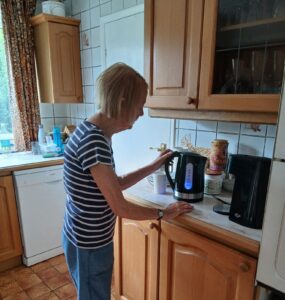
- Difficulty managing the practical side of cooking – from opening packaging and chopping ingredients to standing for long periods.
One change in isolation does not necessarily indicate a problem. But several changes together may suggest that it is worth having a conversation.
Ask a better question than “Have you eaten?”
If you are concerned, there is another simple point worth considering.
Asking someone, “Have you eaten today?” will probably get a yes or no answer.
Instead, try: “What did you have for lunch today?”
It opens a much more useful conversation.
You may discover that lunch was a balanced meal they enjoyed. Equally, you may realise that “lunch” has regularly become a biscuit and a cup of tea.
This is not about monitoring or removing someone’s choices. It is about noticing changes that may otherwise remain hidden.
Making mealtimes enjoyable again
Good nutrition matters, but food is not purely functional.
It can be one of the most enjoyable parts of the day. Favourite recipes, familiar smells and sitting down to something freshly prepared can all make mealtimes more appealing.
Research and UK guidance around eating well in later life also recognise that social circumstances can affect appetite and food intake. Eating alone and losing the motivation to cook for one can both become factors.
This is why support with meals at home can look different for every person.
For one customer, it might mean help with food shopping. Another may want assistance preparing ingredients while remaining involved in cooking. Someone else may benefit from having their meal prepared for them.
And sometimes there is room for something a little more ambitious.
Which brings us back to Amy’s fishcakes.
Homemade fishcakes, courtesy of Amy
Amy prepared homemade fishcakes using salmon, cod and haddock, accompanied by fresh vegetables.
We liked this particular photograph because it captures something very ordinary – and that is precisely why it matters.
Home care takes place within everyday life. Supporting someone to eat well does not always require a grand intervention. Sometimes it is about recognising that a freshly prepared meal can bring nutrition, variety and enjoyment into someone’s day.
At Braeburn Care, our Care Professionals can provide practical meal preparation and support at home as part of a customer’s individual care arrangements.
Because eating well in later life should not just be about whether there is food in the fridge. It should also consider choice, enjoyment, routine and whether someone has the practical support they need to continue eating well at home.
Frequently Asked Questions
- How can home care help an older person with meal preparation? Depending on their individual care arrangements, Braeburn Care Professionals can support customers with tasks such as shopping, preparing meals and drinks, and helping make everyday mealtimes easier to manage.
- What are the signs an older person may not be eating enough? Changes can include unexplained weight loss, reduced appetite, regularly skipping meals, food being left unused, loose-fitting clothes or having less energy than usual. Unexplained weight loss or significant appetite changes should be discussed with an appropriate healthcare professional.
- Is losing your appetite a normal part of ageing? Appetite can change with age, but persistent appetite loss or unexplained weight loss should not automatically be regarded as a normal consequence of ageing. Medical, physical and social factors can all contribute.
- Can a home carer cook meals from scratch? Yes. Where meal preparation forms part of the agreed care plan, a Braeburn Care Professional can support customers with preparing meals at home according to their preferences and individual requirements.
- Does Braeburn Care provide meal support in Tunbridge Wells? Yes. Braeburn Care provides home care and practical support to customers across Tunbridge Wells and surrounding areas, which can include meal preparation where this forms part of their individual care arrangements.
- Can you provide home care with meal preparation in Tonbridge, Sevenoaks and Crowborough? Braeburn Care supports customers across Tunbridge Wells, Tonbridge, Sevenoaks, Crowborough and surrounding communities. Families can speak to our team about the type and level of support required.
- What should I do if I am worried about an older relative losing weight? Unintentional weight loss can have a number of causes and should not be ignored. Speak to their GP, another appropriate healthcare professional or contact our team, particularly if the change is unexplained, significant or accompanied by difficulty eating or swallowing.
Could someone you love benefit from a little more support at home?
If you’ve noticed changes in a loved one’s eating habits, shopping, cooking or ability to manage everyday tasks, it may be time to explore what additional support could make life easier. Whether it’s help preparing nutritious meals, shopping, companionship or more comprehensive care, our team can talk you through the options and help you decide what feels right;
 Call us on 01892 577680
 Learn more at www.braeburncare.co.uk
 Email enquiries@braeburncare.co.uk